

In Victoria, a conveyancer or a solicitor can take care of your property purchase. The two titles read the same on a quote, yet only one belongs to a qualified lawyer. Do you know which one can tell you what your contract terms mean before you sign?
The Difference Between A Conveyancer And A Solicitor In Victoria
Keep reading and learn what separates a licensed conveyancer from a solicitor in Victoria. You will also see who can advise you on a contract, who carries insurance for advice, and which option suits your purchase.
Key Takeaways
- A conveyancer and a solicitor do different work on a Victorian property purchase.
- Licensed conveyancers prepare documents, handle adjustments, and complete settlement for buyers and sellers.
- A conveyancing licence does not cover advice about what your contract terms mean.
- Solicitors hold a practising certificate, so contract and section 32 advice is permitted work.
- Professional indemnity cover follows the work each adviser is qualified to perform.
- Caveats, easements, title limits, and disputes call for a qualified property lawyer.
- Asking about qualifications and insurance before you sign helps you choose correctly.
Is A Conveyancer A Solicitor?
No. A conveyancer is not a solicitor.
Victoria licenses conveyancers under the Conveyancers Act 2006, with Consumer Affairs Victoria as the regulator. A solicitor takes a different path, finishing a law degree, gaining admission to the Supreme Court, then applying for a practising certificate.
The two roles overlap at settlement, where each can transfer a property from seller to buyer. The training behind them, and the work each one is permitted to do, differ from the start.
What A Conveyancer Handles For You
A licensed conveyancer prepares the documents that transfer property ownership from seller to buyer. Duties include transfer forms, rates and water adjustments, liaison with your lender, deposits kept in trust, and attendance at settlement.
The work demands accuracy and tight timing. A single missed adjustment or late document can delay settlement for everyone involved.
One limit applies to the licence. A conveyancer cannot advise you on what your contract terms mean, or on the risks you take on when you sign.
What Only A Solicitor Can Do
A solicitor completes a law degree, gains admission to the Supreme Court of Victoria, then holds a practising certificate from the Victorian Legal Services Board. Legal advice sits within permitted work under the certificate.
Four tasks belong to a solicitor. Advising on what each contract term means for you, explaining the risks disclosed in a section 32, drafting special conditions, and negotiating amendments with the vendor’s representative.
A solicitor can also act for you in a dispute. Court work, caveats, and termination of a contract all call for a qualified lawyer.
Insurance And Who It Covers
Both licensed conveyancers and practising solicitors must have professional indemnity insurance in Victoria. Conveyancers obtain cover as a condition of their licence under the Conveyancers Act 2006.
The scope of each policy follows the scope of the work. A conveyancer is insured for conveyancing work, while a solicitor’s cover extends to legal advice as well.
Ask your adviser two questions before you engage them. Who insures you, and does the policy cover advice on my contract?
What Signing A Contract Commits You To
In Victoria, risk in the property passes to the buyer from the day of sale, unless the contract states otherwise. Rights to end a contract after that point are limited to what the contract and the law allow.
The vendor statement, known as a section 32, discloses matters attached to the title before you commit. Disclosures can include rates, owners corporation fees, easements, covenants, building permits, and planning restrictions.
Reading each disclosure before you sign gives you the full picture of your obligations. A solicitor can explain how each item applies to your plans for the property.
When To Call A Solicitor
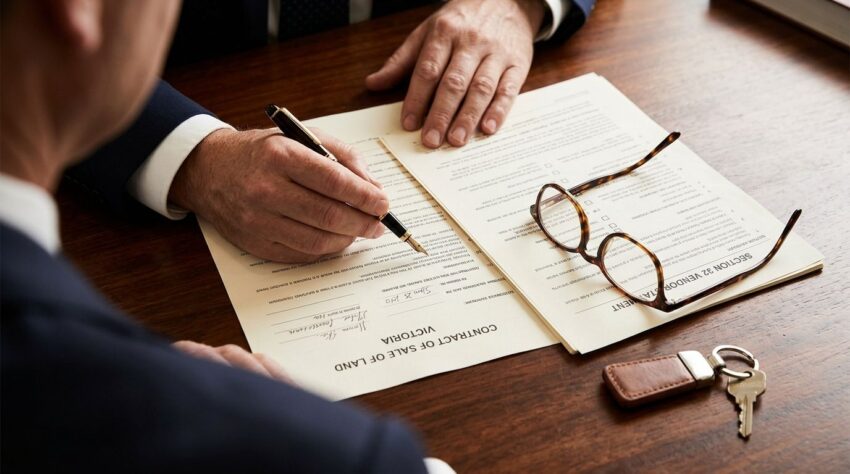
Some purchases raise legal questions a conveyancing licence does not cover. Caveats on a title, easements limiting your plans, unapproved building work, and co-ownership agreements all belong in the group.
A dispute is the clearest case for legal help. Claims against a vendor, a failed settlement, or ending a contract early all need a qualified lawyer.
Commercial deals carry extra paperwork, including leases, tax on the sale price, and tenant records. A property lawyer can go through each document and explain what you are agreeing to.
For a file of the kind above, experience counts. Melissa Barlas was named Sole Practitioner of the Year at the 2023 Australian Law Awards and has completed over 4,000 transactions at Conveyed.
Who Should You Choose?
Fees for the two services sit in a similar range in Victoria. The deciding factor is the type of advice your purchase calls for.
Ask one question before you engage anyone. Is my adviser qualified and insured to advise me on the contract I am about to sign?
A straightforward residential transfer falls within what a licensed conveyancer can do. Anything involving disputes, unusual conditions, or commercial terms belongs with a solicitor.
Conveyed charges a fixed fee from $330 and holds over 120 five-star Google reviews. You receive the price in writing before any work begins.
Get The Right Advice
A conveyancer prepares and settles your transfer. A solicitor does the same work and advises you on the terms as well.
Knowing the difference puts you in a better position before you sign. The right adviser saves you time, cost, and uncertainty later.
Have a contract of sale or a section 32 waiting for review? Speak with Melissa Barlas at Conveyed before you sign.

Frequently Asked Questions
Can a licensed conveyancer act for me when selling property as well as buying a house?
Yes. A conveyancing service covers each side of a sale or purchase. The role of a conveyancer remains the same whether you are buying or selling a property.
How much does conveyancing cost in Victoria?
Fees vary by firm and by the complexity of the matter. Conveyed charges a fixed fee from $330, confirmed in writing before the conveyancing process begins.
How long does a contract of sale review take?
Allow a few business days with most firms. Conveyed returns contract and section 32 reviews within 48 hours, so you can make an informed decision early in the process.
Do I need a solicitor for all property transactions, or can I use a conveyancer?
A licensed conveyancer can handle a straightforward residential property transfer. Choose a solicitor for complex legal issues, such as disputes, caveats, or commercial properties.
Who handles the transfer of property ownership at settlement?
Solicitors and conveyancers each complete the settlement process in Victoria. Settlement happens electronically, with funds and the property title dealt with on the same day.
Relax knowing our experts are handling your property conveyancing.