

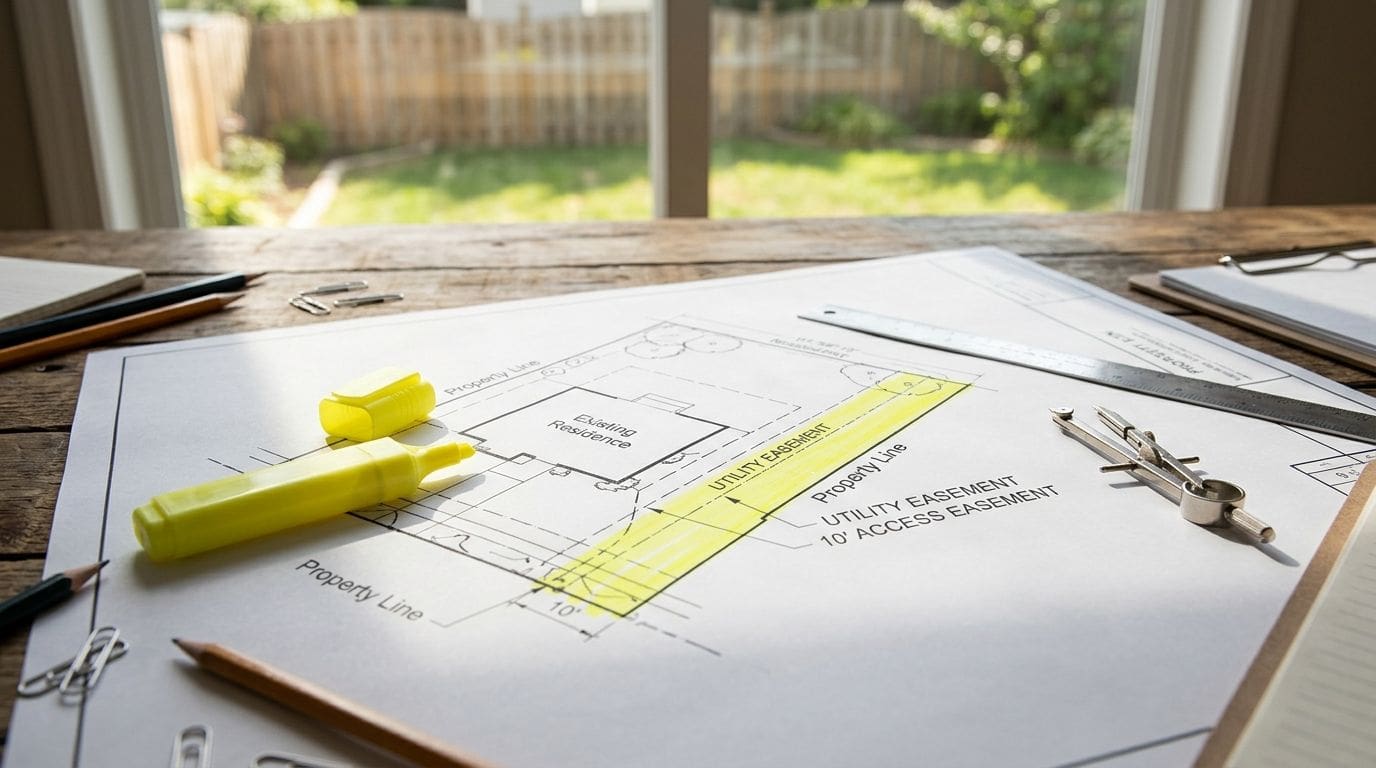
You can already picture the deck, the pool or the extension on your new block. What if a neighbour or the local water company has a legal right to use part of the land? With clear facts about easements, owners can place each project where the law allows.
What Is an Easement? A Simple Guide for Property Owners
Continue reading to learn who else may use part of your block and what you can still build. Find out what an easement is and how to change or remove one.
Key Takeaways
- An easement is a right to use land belonging to someone else for a set purpose.
- A neighbour who benefits owns the “dominant” block, while the other lot is “servient.”
- Owners keep full title but need consent to build over a service easement.
- Water and power companies may enter the marked strip to check or fix their pipes and cables.
- In Victoria, 20 years of open use without permission can create a legal right of access.
- Owners may apply to change or remove an easement through council or the Supreme Court.
- Victorian sellers must list any rights of use in the Section 32 statement.
What Is an Easement?
An easement is a legal right to use part of another person’s property for a specific purpose. Lawyers call the arrangement an interest in land because it is tied to the block instead of its owner.
The easement still applies after a sale. The terms and conditions transfer to a new owner.
Common examples include drainage, sewerage, power lines, and shared driveways.
Who Benefits From an Easement
Each parcel of land involved has a legal label. “Dominant” is the name for the block with the benefit. The burdened lot is called “servient.”
A shared driveway is a simple example of a private easement. One household has a right of way to cross it, which makes its block dominant. The neighbour who owns the ground has the servient lot.
There is no dominant block in an easement in gross. A water company or council receives the benefit instead.
What Owners Can Build and Use
The owner of the servient lot keeps full title to the property. Everyday use of the land is allowed while the other party has clear access.
Owners need approval from the utility company before building a shed, garage or extension over a service easement. For stormwater drains, the local council gives consent.
Access for Water, Gas and Power
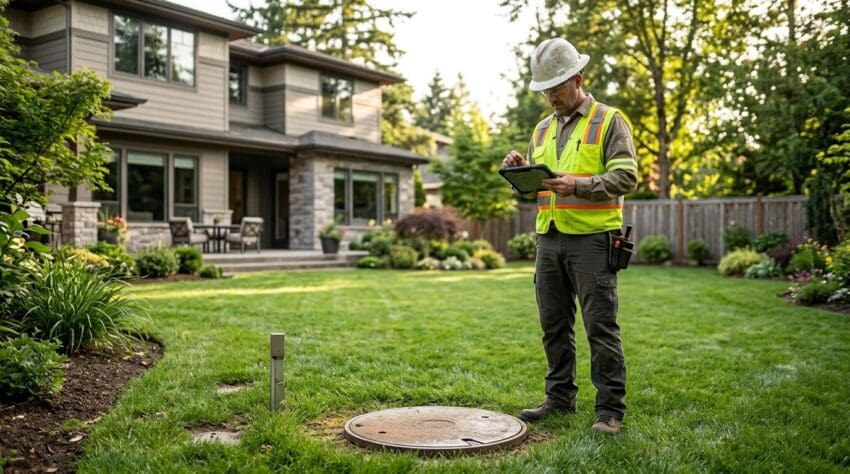
Utility companies can have rights over private land for pipes and cables. Some are statutory easements, set up by law instead of a signed agreement. Company staff may enter the land to check, fix or replace their equipment.
Each registered easement and the party it benefits appear on the plan of subdivision. Some water companies need access to their pipes at any hour.
Easements Without a Written Agreement
Owners can grant an easement in a signed document. Others come about with no paperwork.
Under Victorian law, using someone else’s path or driveway for 20 years or more may create a legal right. The access must be open, peaceful, unbroken and without the owner’s permission. Lawyers call the result a prescriptive easement.
The 20-year rule differs from the law in most other Australian states. Courts can also recognise an easement by necessity when a block is landlocked with no road access. A property lawyer can review the facts behind either type of claim.
Change or Remove an Easement
Owners of land affected by the easement can apply to change or remove it.
One option is a planning permit from the local council. Another is an application to the Supreme Court of Victoria under section 84 of the Property Law Act.
Check Easements Before You Buy
An easement can affect where a property owner builds or extends a home. In Victoria, the seller must list each one in the Section 32 statement.
Melissa Barlas reviews titles, plans of subdivision and other sale documents for clients. She explains each easement in plain words. Melissa has over a decade of experience in property law.
Ask a property lawyer to check the title and Section 32 statement before you sign the contract.
Next Steps for Property Owners
You can now buy, build and plan around an easement with confidence. Book a meeting with Melissa Barlas to talk about questions, concerns or experiences with your property transaction.

Frequently Asked Questions
Can an unregistered easement still affect the land after a sale?
Yes. Under Victorian law, an unregistered easement can bind the land after a sale to a new owner. Either party can apply to Land Use Victoria to record it.
What does an application to build over an easement area involve?
Owners lodge a form with the easement holder. One Melbourne council charges $338.60 from 1 July 2026. A legal agreement, when needed, adds $1,300. Some applications also need a camera inspection of nearby drains.
Can a pipe be on private land without a registered easement?
Yes. Some older sewer and stormwater lines were laid before today’s registration rules. Under the Water Act 1989, owners need the water company’s consent before certain building work near its pipes.
Can the easement holder use the land for any purpose?
The holder’s use is limited to the purpose stated in the easement. A right of way, for example, allows people to pass over a defined part of the land. Any works must be reasonably necessary and cause as little impact as possible.
What happens when one person owns the two properties linked by an easement?
Under common law, the easement can end once a single owner has the dominant and servient land.
Relax knowing our experts are handling your property conveyancing.