

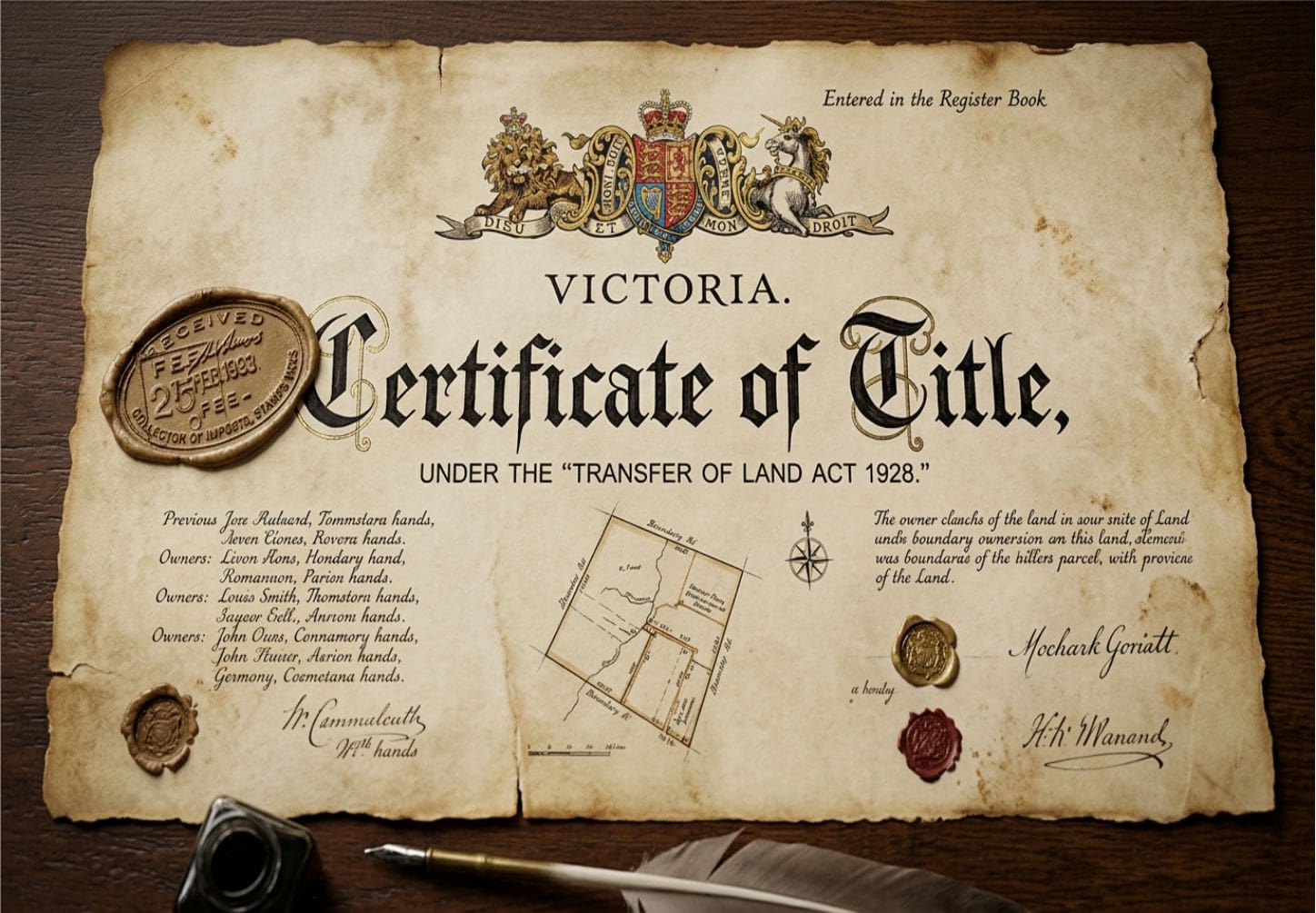
Certificate of Title Can Protect You in Times of Disputed Ownership
You pay hundreds of thousands of dollars for a home. Months later, a stranger appears with a legal claim on the same land. Could you lose the property you already paid for?
Keep reading and learn what a certificate of title reveals before you sign anything. You will also see how a property lawyer stops a costly mistake before your money disappears.
Key Takeaways
- The certificate of title is legal proof of the seller’s right to sell to you.
- Title issues found after signing can trap a buyer in a contract with no easy exit.
- Easements on a title can restrict the building plans you had for your new property.
- A mortgage registered on the title must be discharged before ownership transfers to you.
- Title risks hidden in legal language are invisible to the untrained eye.
- A property lawyer reads title details to protect your money directly.
Title Proves the Seller’s Right
The certificate of title is an official government record. A land register confirms who legally owns the property at the time of sale. Without a check, you have no way to know the seller can really sell.
Imagine handing over your savings to someone with no legal right to the home. Ownership disputes have ruined buyers left in the same position. A property lawyer checks the certificate before you spend a single dollar, so the damage never starts.
The Trap of Premature Signing
Once a contract of sale is signed, you are legally bound by the terms. Problems found after the contract date rarely give a clean exit. In most cases, a buyer must go ahead and pay, whatever the title hides.
The fear is real for a reason. Experienced property lawyers watch buyers get stuck in deals they cannot escape. A title needs a close look before any contract is signed, not after the trap closes.
Legal review at the contract stage protects your deposit. A lawyer guiding you means trouble from a previous owner stays off your shoulders.
Easements Restrict Your Building Plans
An easement gives another party legal access to part of your property. A utility provider, council, or neighbour can use a section of the land. Removal of an easement is not possible simply because it clashes with renovation plans.
Picture buying a home for the extension you always wanted, then learning a registered restriction forbids it. Buyers frequently find easements after settlement, when nothing can be undone. A property lawyer reviews each interest before any document is signed, so your plans survive the purchase.
Registered Mortgages Must Be Discharged
A registered mortgage means a lender holds a financial stake in the property. The claim must be formally discharged before legal ownership transfers to you. Until the release is confirmed, you could take title while the seller’s debt remains attached.
Inheriting another person’s loan is a frightening way to start homeownership. Settlement cannot go ahead until the bank formally clears the loan. A property lawyer handles the discharge directly with the lender, so your purchase begins clean.
Hidden Risks Live in Legal Language
Not every title risk looks alarming on first read. Caveats, covenants, and restrictions appear in dense legal text without obvious warning. To an untrained reader, the wording can look minor, even harmless.
A caveat signals a third party claiming an interest in the property. One registered notice alone can delay or collapse your settlement. The danger is missing one quiet line. A trained eye reads every word to stop you from losing the deal.
A Lawyer Sees What Others Miss

A property lawyer does not simply read a certificate of title. Every detail in the document is understood through years of legal training and practice. Each registered interest, restriction, and note is checked for its real effect on your purchase.
Melissa Barlas and the team at Conveyed have completed over 4,000 property transactions in Australia. The depth of experience means nothing on a title goes unnoticed. Clients regularly describe getting plain-language explanations of risks they would never have found alone, which turns fear into confidence before signing.
Talk to Melissa Barlas Before You Sign
A certificate of title safeguards your ownership in ways most buyers never expect. Reach out to Melissa Barlas at Conveyed. Discuss your property situation and take the next step toward a purchase you can trust.
Frequently Asked Questions
How do I order a copy of my certificate of title?
You request a copy from the relevant land registry in your state. In Victoria, the online land title system handles requests electronically. A conveyancer can obtain a copy on your behalf in PDF format within a short time.
What is the Torrens title system?
The Torrens title system is the modern method of land ownership in Australia. A central register records the current owner and every registered interest. An older method, the old system title, predates Torrens and relies on a chain of deeds.
What is a volume and folio number?
The volume and folio number is the title reference used to identify a parcel of land. A title search uses the same number to pull up the official record. Your lawyer needs the reference before any property in Western Australia, NSW, or South Australia changes hands.
Why does a title search matter before buying or selling?
A title search reveals who owns the property and any registered interests that affect the land. Buyers learn about a mortgage, easement, or trustee arrangement before signing. The search protects you during land transactions where money moves fast.
Can identity fraud affect a property title?
Yes, identity fraud is a genuine threat in land dealings. Verification of identity is now a legal requirement before electronic lodgement. A conveyancer confirms each party has the lawful right to deal with the land.
What does a paper certificate of title mean today?
Paper certificates of title were once proof of ownership held by the owner. Many states, including NSW, have moved fully to an electronic land titles register. The registrar now keeps land information digitally rather than on a paper title.
What is a discharge of mortgage on a title?
A discharge of mortgage removes a lender’s registered interest from the land register. The step confirms the property is no longer subject to a mortgage. The registrar general updates the official register once the lender authorises the release.
Relax knowing our experts are handling your property conveyancing.